

Painting high ceilings requires more than just paint and a roller. Proper equipment, including ladders, scaffolding, extension poles, quality rollers, and safety gear, helps ensure safe access, consistent coverage, and professional-looking results. Choosing the right tools can improve efficiency, reduce fatigue, and minimize the risk of accidents when working at elevated heights. For especially tall ceilings or complex spaces, professional painters often use specialized equipment and techniques to achieve the best results.
Key Takeaways
- High ceilings require specialized equipment for safe and efficient painting.
- Extension ladders, multi-position ladders, and scaffolding each serve different purposes.
- Extension poles help improve reach and reduce ladder repositioning.
- Quality brushes and rollers contribute to smoother, more consistent finishes.
- Drop cloths and personal protective equipment help prevent accidents and damage.
- Proper paint loading techniques reduce drips and uneven coverage.
- Very high ceilings may require professional equipment and expertise.
High ceilings have many advantages. They make a space look and feel expansive, allow more abundant natural light, and potentially increase property and resale value. But they also have a disadvantage: cleaning and maintaining them.
Painting high ceilings presents challenges like difficulty reaching higher areas, maintaining even coverage, and avoiding drips or streaks. The right equipment, such as sturdy ladders, extension poles, and specialized brushes or rollers, is essential for ensuring safety and efficiency, allowing for a smoother application and reducing the risk of accidents.
Ladders and scaffolding
Types of ladders for high ceilings
Extension ladders:
- Design: These ladders consist of two or more sections that slide apart to extend the ladder’s height.
- Suitability: They are ideal for reaching high ceilings as they can extend to considerable lengths, making them perfect for tasks like painting, cleaning, or installing fixtures.
- Considerations: Ensure the ladder is positioned securely and at the correct angle to prevent slipping.
Multi-position ladders:
- Design: These versatile ladders can be configured into various shapes, such as an A-frame, extension ladder, or scaffolding system.
- Suitability: They are excellent for high ceilings because they can be adjusted to different heights and angles, providing flexibility for various tasks.
- Considerations: Their multi-functionality makes them an excellent choice for those who need one ladder for multiple purposes.
Overview of scaffolding options
1. Mobile scaffolding:
- Design: Equipped with wheels, mobile scaffolding allows easy movement around the workspace.
- Benefits: It provides a stable platform for working at height and can be moved without disassembling. It’s perfect for tasks requiring frequent repositioning, such as painting large ceiling areas.
2. Folding scaffolding:
- Design: These are lightweight, compact scaffolds that are easily foldable for storage or transport.
- Benefits: They are ideal for indoor use, especially in tight spaces. They provide a stable platform and are quick to set up, making them convenient for smaller jobs.
3. Stationary scaffolding:
- Design: These are fixed scaffolds that provide a solid and stable platform, typically assembled in one location.
- Benefits: It is best for projects requiring prolonged work in one area, offering superior stability and support for heavy-duty tasks.
Extension poles
Guide on selecting extension poles
- Compatibility: Ensure the extension pole is compatible with your paint roller or brush. Most poles have a universal thread or quick-lock system for easy attachment.
- Adjustability: Choose an adjustable pole that extends to different lengths. It allows flexibility when painting various ceiling heights.
- Grip and comfort: Look for poles with ergonomic grips or non-slip handles to reduce hand fatigue during prolonged use.
Choosing the right length and material
Length: For standard ceilings (8-9 feet), a pole that extends from 2-4 feet is sufficient. For higher ceilings, consider poles that extend up to 8-12 feet. Always opt for an adjustable pole to tailor the length as needed.
Material:
- Aluminum: Lightweight and durable, making it ideal for extended use without causing strain.
- Fiberglass: It is heavier than aluminum but offers excellent durability and is non-conductive, which is crucial when working near electrical fixtures.
- Wood: Sturdy but can be heavier and may splinter over time.
Selecting the right extension pole can make painting high ceilings more manageable and help achieve a smooth, even finish.
Paint rollers and brushes
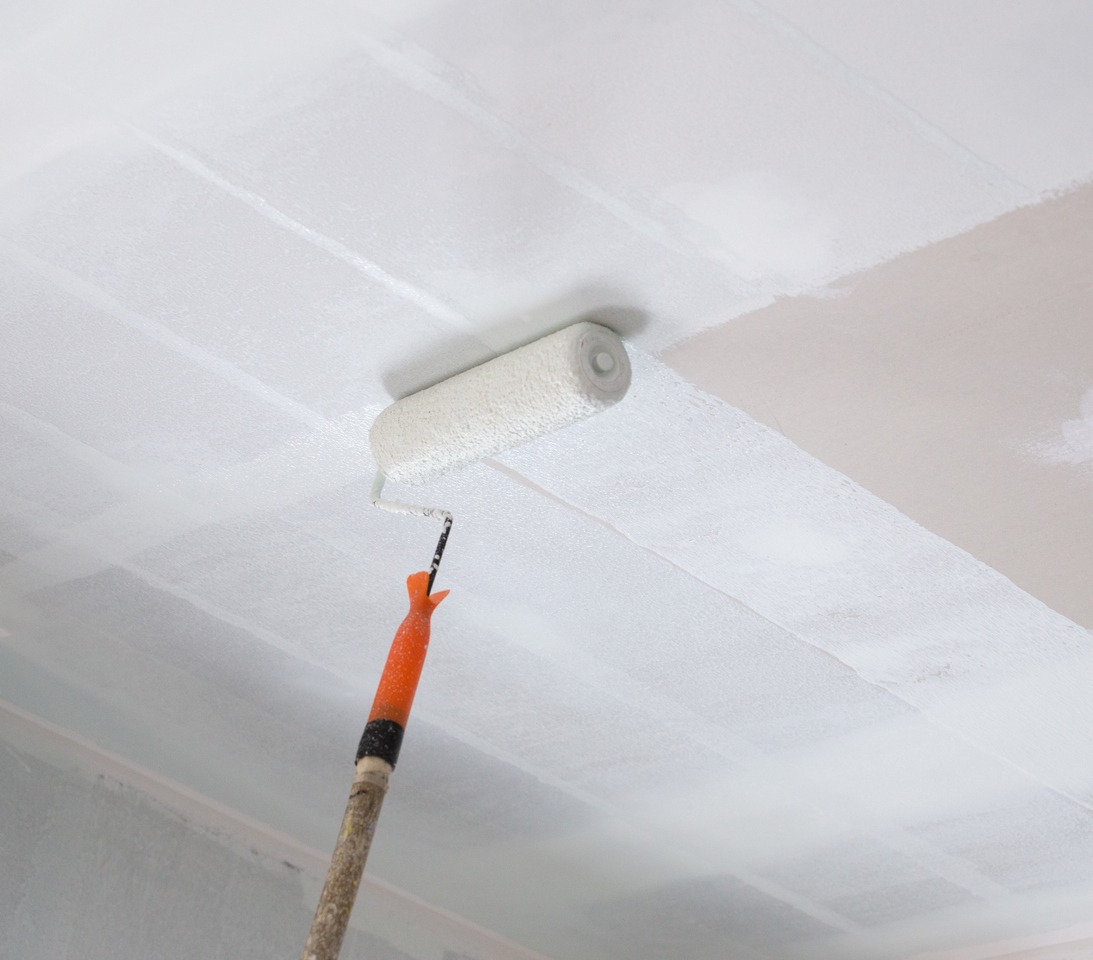
Recommendations for paint rollers with extendable handles
Wooster Sherlock GT Convertible Roller System:
- Features: This system includes an extendable handle that locks in place with a simple push. The handle is sturdy and easy to adjust, allowing for varying lengths.
- Best for: Reaching high ceilings and large walls with minimal effort.
Purdy Power Lock Extension Pole:
- Features: This pole has a durable, non-slip grip and a universal tip that fits most roller frames. It locks securely at multiple lengths and is made of lightweight materials for ease of use.
- Best for: Professional painters who need versatility and control.
Mr. LongArm Pro-Lok Extension Pole:
- Features: This pole’s heavy-duty construction and smooth telescoping action make it ideal for indoor and outdoor projects. Its universal threaded tip makes it compatible with most roller frames.
- Best for: Large-scale painting projects and exterior work.
Advice on selecting the best brushes for cutting in edges and corners
Angle sash brush:
- Recommendation: A 2 to 2.5-inch angled sash brush is ideal for cutting in edges. The angle allows for precision in corners and along trim.
- Best brands:
- Purdy XL Series: Known for their high-quality bristles and comfortable handles.
- Wooster Silver Tip: These brushes provide a smooth finish and are easy to control.
Short-handle brushes:
- Recommendation: Short-handle brushes give you better control when cutting in tight spaces. They are easier to maneuver and can help achieve a cleaner line.
- Best brands:
- Purdy Clearcut Glide: Excellent for precise cutting in.
- Wooster Shortcut: Has an ergonomic design and flexible handle for added comfort.
Tapered edge brushes:
- Recommendation: Tapered edge brushes help with detail work and cutting along trim or baseboards. A brush with a tapered edge can help achieve crisp lines with minimal effort.
- Best brands:
- Corona Chinex Excalibur: Provides excellent paint pick-up and release.
- Purdy Pro-Extra Glide: Offers superior coverage and smooth application.
Tip: When selecting a brush, consider the type of paint you’re using. Synthetic bristles work best with latex paints, while natural bristles are better for oil-based paints.
Drop cloths and protective gear
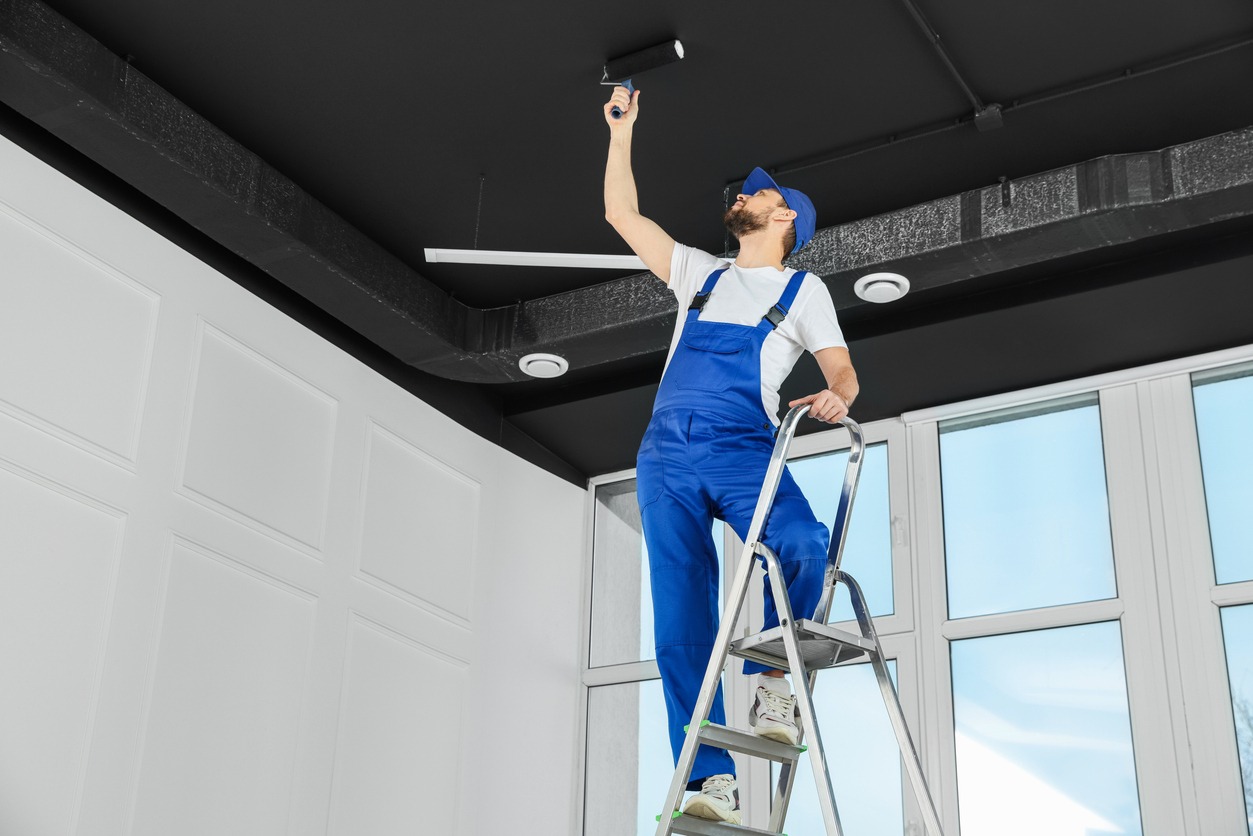
Drop cloths are essential for protecting floors and furniture when painting high ceilings. Drop cloths prevent paint splatters and drips from damaging surfaces, making cleanup easier and safeguarding your space from accidental messes.
As for protective gear, safety glasses shield your eyes from paint splashes, especially when working overhead. Gloves protect your hands from paint and chemicals, while masks or respirators are crucial for avoiding inhalation of fumes, particularly when using caustic solvents or working in poorly ventilated areas. Proper protective gear ensures safety and comfort during the painting process.
Paint trays and buckets
When painting high ceilings, using the right equipment can make the job much easier and more efficient:
Choosing paint trays and buckets
Choose large, stable paint trays or buckets that can hold a significant amount of paint to reduce frequent refills. Look for trays and buckets with a wide base to prevent tipping and a sturdy handle for easy transport. Buckets with hooks allow you to attach an extension pole securely, making it easier to reach high areas without balancing the bucket.
Using paint bucket grids
A paint bucket grid is essential for ensuring that paint is even loading on your roller. Place the grid inside the bucket, and after dipping your roller in the paint, roll it along the grid. It helps to distribute the paint evenly on the roller, reducing drips and ensuring a consistent application. This technique is helpful when working on high ceilings, as it minimizes the risk of uneven coverage or streaks.
Conclusion
You must have the correct equipment for a safe, efficient, and successful high-ceiling painting project. They include ladders or scaffolding, paint rollers and brushes, extension poles, drop cloths and protective gear, paint trays, and buckets.
Investing in quality tools is crucial for a successful and safe painting project. High-quality brushes, rollers, and ladders make the job easier and ensure a smoother, more professional finish. Don’t compromise on safety or results—choose the right tools.
Ready to start your project? Contact Custom Painting, Inc. today for expert advice and top-notch service! Call us at 925-365-7519 or message us here for a free consultation and estimate.
FAQ
What is the safest way to paint a high ceiling?
The safest approach is to use properly rated ladders or scaffolding, maintain three points of contact when climbing, and avoid overreaching. For very high ceilings, professional painters often use scaffolding or specialized lift equipment.
How long should an extension pole be for painting ceilings?
The ideal length depends on ceiling height. Most homeowners can handle 10- to 12-foot ceilings with an adjustable extension pole ranging from 4 to 8 feet.
Is scaffolding better than a ladder for painting ceilings?
For large areas or extended projects, scaffolding often provides greater stability, comfort, and efficiency than repeatedly moving a ladder.
What type of roller is best for ceiling paint?
A high-quality roller cover with the appropriate nap length for the ceiling texture helps provide even coverage while minimizing splatter.
Can I paint a two-story ceiling myself?
While it is possible, two-story foyers and vaulted ceilings present significant safety challenges. Professional painters have access to specialized ladders, scaffolding, and lifts designed for these environments.
How can I reduce paint splatter when painting a ceiling?
Use quality roller covers, avoid overloading the roller, and apply paint with steady, controlled movements. Paint bucket grids can also help remove excess paint before application.